I-POS Series
A family of desktop RFID readers for product identification, tag verification and security tag removal at the checkout
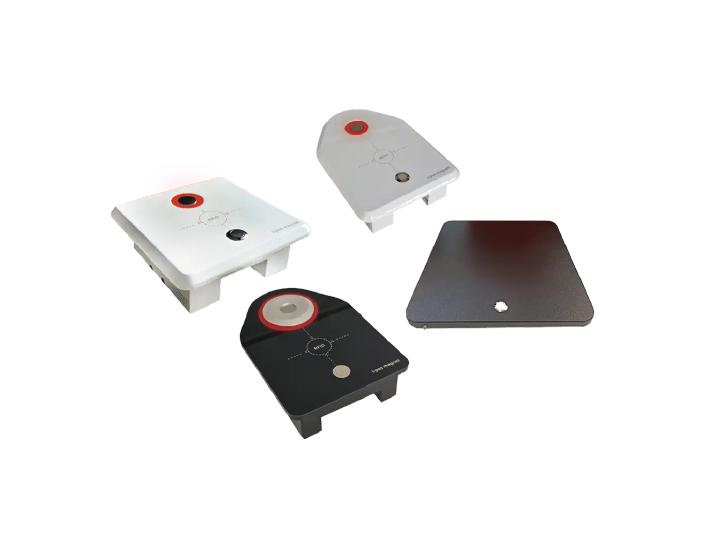
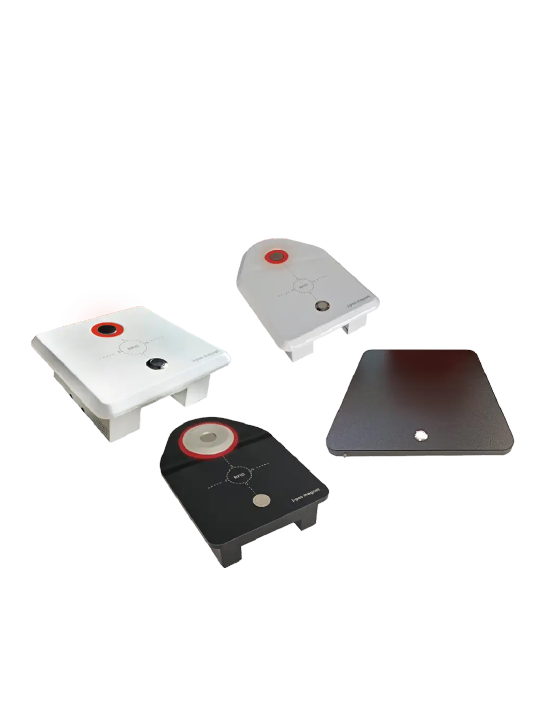
I-POS Series
A family of USB or Linux-based POS readers with an optional deactivator.
- USB / Linux based
- Magnet and deactivator
- Colour and form options
Key features: RFID POS Reader
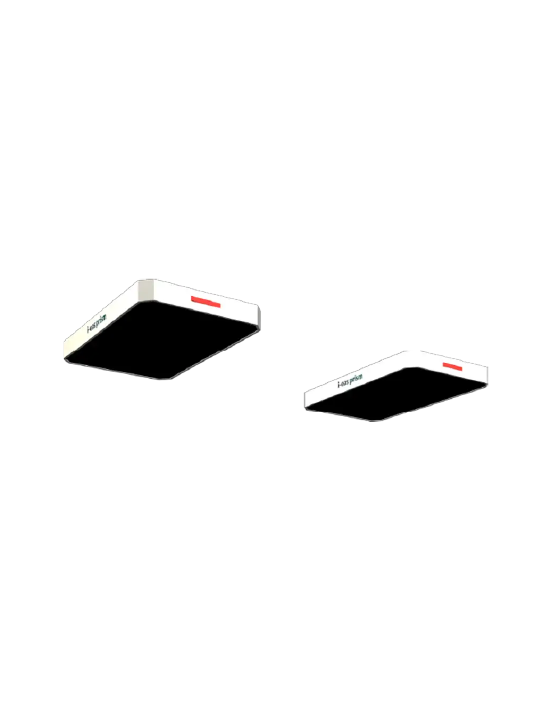
I-POS is a family of desktop readers that takes up little space on the checkout counter and lets RFID-tagged products be recognised quickly at the point of sale. The series includes a standard reader, models with an integrated magnetic detacher and economical variants that run on USB only. With black or white surfaces and square or more compact body options, the device can be matched to the store's checkout design.
UHF 860-960 MHz
45-50 cm read zone
50 tags / second
10,000 gauss magnetic detacher
RGB light and buzzer
Linux and REST API
Technical details.
Use the technical specifications to assess how well the I-POS Serisi fits your system infrastructure and operational requirements.
- Product Family
- I-POS V2, I-POS Magnet, I-POS Magnet White, I-POS Magnet Lite Square, I-POS Magnet White Square
- Product Type
- RAIN RFID desktop reader / desktop RFID reader with integrated magnetic detacher, depending on the model
- Protocol
- EPC Class1 Gen2 / ISO 18000-6C
- Frequency Range
- 860 - 960 MHz UHF
- Read Zone
- Adjustable near-field read zone of up to approx. 45 cm depending on the model, and up to 50 cm on some lite variants
- Read Rate
- 50 tags / second
- RF Power
- Stepped adjustment options of 1 dBm - 25 dBm or 1 dBm - 30 dBm, depending on the model
- Antenna Structure
- Circular polarization
- Connectivity Options
- USB Host, USB HID, Bluetooth / BLE, Ethernet, Wi-Fi, PoE and USB power options, depending on the model
- Operation and Integration
- Linux-based architecture, web interface, REST API, local data storage and automatic synchronisation on advanced magnet models
- Magnet Detacher
- 10,000 gauss super magnet in the I-POS Magnet family; flat desktop reading design in the standard I-POS desktop reader variant
- Light / Sound Feedback
- RGB light and buzzer beep support, depending on the model
- Surface and Material
- Metal, plastic, plexiglass and, on some variants, wood top surface alternatives; black and white design options
- Approximate Dimensions
- Can be produced in formats of approx. 242 x 170 x 60 mm, 251 x 180 x 71 mm or 32 x 32 x 5 cm, depending on the model
- Operating Temperature
- -20 °C to +50 °C
- Humidity
- 5% RH - 95% RH non-condensing
- Use Cases
- Point of sale, document tracking, access control, inventory management, textiles, accessories, eyewear, asset tracking and security applications
Flexible, Compact RFID Reading at the Checkout with an RFID POS Reader
Rather than imposing a single model, the I-POS family gives you the freedom to choose according to the store's checkout layout. On the same tag infrastructure you can set up either a simple reader or a smart POS terminal with a detacher.
- Model variety
- One-point processing
- Multiple connectivity
- Data security

What Is an RFID POS Reader?
An RFID POS reader is a desktop device that identifies a product to the system at the point of sale by reading the UHF RFID tag on it. When the cashier places the product on or near the reader, the tag’s EPC code is read and matched with the product, size, colour and price information in the store software. Unlike a barcode, there is no need to point the product’s label at a laser beam.
The I-POS family fulfils this RFID desktop reader role in three ways for different store needs. Standard desktop models only read. In the Magnet models, a 10,000 gauss magnetic detacher is built into the reader; the cashier scans the product, removes the hard security tag at the same spot and hands the product to the customer. The USB-focused lite variants are preferred for low-cost, simple checkout setups.
The Linux-based architecture of the advanced models allows the data read to be passed to software via REST API, and to be stored on the device during a network outage and synchronised when the connection returns. Thanks to the RAIN RFID ecosystem used as the tag standard, tags from different manufacturers work with the same reader.