RFID Technology in Logistics
Why Logistics Is Where RFID Proves Itself
RFID technology has been deployed across dozens of industries retail stores, hospital wards, university libraries, textile production lines. But it is in logistics where its capabilities are most visible, most measurable, and most difficult to ignore.
The reason is simple: logistics is a chain of handoffs. Every time a pallet moves from a supplier truck to a dock door, from a dock door to a storage location, from storage to a dispatch bay, from a dispatch bay to an outbound vehicle that handoff is an opportunity for error, delay, and lost visibility. Traditional systems depend on workers scanning barcodes at each of those moments. RFID removes the dependency on manual scanning entirely. The read happens automatically, at full speed, without anyone stopping to aim a scanner.
The market reflects this. Transportation and logistics is now the highest-growth RFID segment globally, with the global RFID market valued at $17.1 billion in 2025 and projected to grow at a CAGR of 11.52% through 2031 (Mordor Intelligence, 2025). Approximately 46% of warehouse logistics operations already rely on RFID-based tracking to reduce shipment errors and improve operational efficiency (Global Growth Insights, 2026).
This guide covers every major application of RFID in logistics operations from dock doors and yard management to cold chain and reverse logistics with the operational specifics that most content on this topic skips over.

The Core Problem RFID Solves in Logistics
Before getting into specific applications, it helps to name the structural problem that RFID addresses in logistics operations because it is the same problem, expressed differently, at every stage of the supply chain.
Every logistics operation depends on knowing where things are. Where is this shipment? Did this pallet arrive? Is this trailer loaded? Was that order complete? The answer to each of these questions requires data and data requires a read event. In a barcode based operation, every read event requires a human being to physically aim a scanner at a visible label. That dependency creates three compounding problems:
- Speed constraints manual scanning is inherently sequential and slow at high volumes
- Accuracy gaps human scanning at scale introduces fatigue-related errors, skipped items, and missed reads, driving average inventory accuracy down to around 63% in real warehouse conditions (CYBRA, 2026)
- Visibility gaps areas without scanner coverage produce no data, creating blind spots between known checkpoints
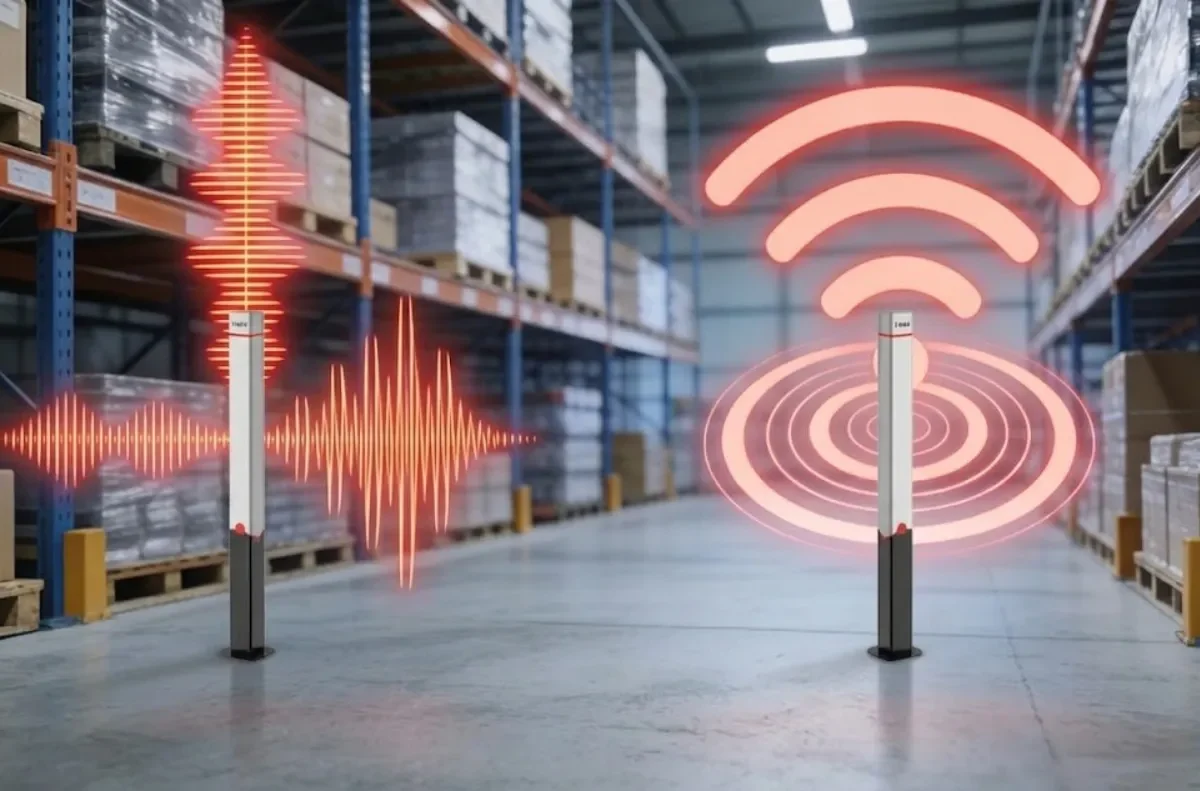
RFID addresses all three simultaneously. A fixed reader at a dock door captures every tagged item passing through without any human involvement. A handheld reader walked down a storage aisle captures every tag in range without the worker needing to face, scan, or unpack anything. The read happens at radio-wave speed, automatically, regardless of item orientation or packaging.
The downstream effect is not just faster scanning it is a different quality of operational data. Real-time visibility at every node of the logistics chain. Error rates below 1%. Inventory records that reflect physical reality.
RFID Applications in Logistics: The Complete Map
Here is where RFID creates tangible operational value, application by application. These are the use cases we deploy and support at ilgazi.com across logistics operations in Turkey and the region.
1. Dock Door Receiving – Automating the Most Error Prone Handoff
The inbound receiving dock is the entry point of every supply chain, and it is where many of the most costly errors originate. Shipments arrive, workers count, scan, and reconcile against purchase orders manually, under time pressure, with trucks idling and dock schedules running behind.
RFID portal readers installed at dock doors change this entirely. As a pallet or cart passes through the portal, every tagged item on it is read simultaneously, logged against the expected purchase order, and flagged for discrepancies in seconds, without anyone stopping the pallet.
- Receiving time reduced by up to 60% compared to manual barcode processes (Smavoo, 2025)
- Automatic three-way matching: physical receipt vs. advance shipping notice (ASN) vs. purchase order without manual reconciliation
- Real-time discrepancy alerts when a shipment is over, under, or contains wrong items
- Dock-to-stock time cut to a fraction of barcode equivalents, reducing dock congestion and improving trailer turnaround
For operations that receive mixed pallets multiple SKUs per pallet, multiple suppliers per truck the value compounds further. RFID readers capture all of it in one pass. Barcode systems require each item to be individually handled and scanned.
Operational impact: Dock door RFID is typically the highest-ROI single intervention in a logistics operation. It removes labour, removes errors, and produces data at the point where data quality matters most.
We supply and install fixed UHF RFID portal readers for dock door applications. View our reader range at ilgazi.com/en/rfid-products/ or contact us for a site specific configuration assessment.
2. Warehouse Inventory Management — Cycle Counts in Minutes, Not Days
In most warehouses, a full physical inventory count is a planned event scheduled in advance, requiring overtime or operational shutdowns, taking two to three days for a mid-sized facility. It is a cost centre that exists not because it adds value, but because the alternative (working from inaccurate records) is worse.
RFID fundamentally changes the cost structure of inventory management. A worker with a handheld RFID reader walking a storage aisle reads every tagged item in that aisle on shelves, in racks, inside bins without touching or reorienting anything. The same inventory count that takes a team two days with barcode scanners takes one person a few hours with a handheld RFID reader.
- Full-warehouse inventory counts reduced from days to hours
- Continuous cycle counting becomes operationally viable specific zones counted daily or weekly without shutting down operations
- Real-time stock level updates to WMS as reads happen, without a separate data entry step
- Location accuracy improves: RFID detects items in the wrong bin or zone, not just confirms their presence
Forklift-mounted RFID readers extend this further. As a forklift moves through normal operations — picking, putaway, transfers the reader captures every tag it passes, creating a continuous inventory snapshot without any dedicated counting activity at all.
Operational impact: For high-SKU operations, the labour saving on cycle counts alone often justifies the RFID infrastructure investment within 12 to 18 months.

3. Yard Management — The Visibility Gap Most Operations Ignore
Yard management is one of the most consistently underserved areas in logistics technology. Most operations have invested in WMS for the warehouse and TMS for transportation but the yard between them, where trailers queue, dock appointments run late, and equipment sits idle, often has no real visibility at all.
RFID addresses yard management through gate readers and passive or active tags on trailers, containers, and yard equipment. Every vehicle entering or leaving the yard is automatically identified. Every trailer’s position in the yard is known. Every dock appointment can be matched against actual arrival, not estimated arrival.
- Gate entry/exit every trailer automatically logged as it enters or leaves, without a gate agent manually recording anything
- Trailer location RFID readers across the yard map which trailer is at which door or parking bay at any moment
- Dwell time tracking identify trailers sitting idle for hours beyond their scheduled slot, a common hidden cost in busy yards
- Driver check-in automation RFID tags on driver cards or cab-mounted transponders enable automated check-in without queuing at a booth
Operational impact: Yard RFID is frequently overlooked and frequently high-value. If your yard has more than 20 trailer slots and dock appointment adherence is a regular problem, this is worth prioritising.
4. Cross-Docking — Where RFID Speed Becomes a Competitive Requirement
Cross-docking transferring inbound shipments directly to outbound vehicles without intermediate storage is one of the most time-critical logistics operations in existence. In a true cross-dock environment, goods may spend less than two hours in the facility. Every identification step that requires stopping, scanning, or manual handling is a bottleneck.
RFID eliminates the identification bottleneck. As inbound pallets arrive at the cross-dock facility, portal readers at the inbound doors capture every item without slowing the pallet’s movement. The system matches the incoming goods against outbound orders and routes them automatically. Staff move product; RFID tracks it.
- Automatic identification at inbound doors without any manual scanning
- Real-time matching against outbound manifests staff directed immediately to the correct outbound dock
- Misrouting detection before goods leave the facility a tag read at the wrong outbound door triggers an immediate alert
- Integration with TMS for outbound schedule management RFID data feeds departure confirmations automatically
Cross-docking operations that process more than 500 pallets per shift are where RFID’s speed advantage over barcode becomes operationally non-negotiable. At that volume, even a 10-second manual scan per pallet accumulates to hours of processing delay per shift.
Operational impact: Cross-docking is where the absence of RFID is most visibly costly. If you operate or are building a cross-dock facility, RFID at inbound and outbound portals is the foundational infrastructure layer.
5. Cold Chain Logistics — Tracking Conditions, Not Just Location
Cold chain logistics the movement of temperature-sensitive goods including food, pharmaceuticals, and biological materials has a monitoring requirement that goes beyond location. It is not enough to know where a shipment is. You need to know what conditions it has experienced throughout its journey.
RFID is the technology that makes this continuous monitoring practical at scale. Sensor-enabled RFID tags combining a standard UHF RFID chip with integrated temperature, humidity, or shock sensors log environmental data continuously and transmit it to readers at every checkpoint.
- Tags log temperature at configured intervals (typically every 15 to 60 minutes) throughout transit
- At each RFID read point loading dock, cross-dock, final delivery accumulated sensor data is captured along with location
- Cold chain breach alerts if temperature exceeds threshold at any point, the system flags the shipment before it reaches the consumer
- Automated compliance records FDA FSMA, EU GDP, and pharmaceutical cold chain regulations require documented temperature histories; RFID generates these without manual log entry
One important technical note for cold chain RFID: tag performance in freezer and high-moisture environments requires careful selection. Standard UHF labels lose adhesion and antenna performance at extreme temperatures. Purpose built cold chain tags tested to -40°C and with moisture-tolerant substrates are required for these deployments. ilgazi.com stocks cold chain rated RFID tags and can advise on the right specification for your temperature range and packaging format.
Operational impact: For pharmaceutical and fresh food logistics, cold chain RFID is increasingly a compliance requirement rather than an operational choice. The question is not whether to deploy it but how to do so correctly.

6. Outbound Shipment Verification — Eliminating Delivery Errors Before They Leave
Outbound errors wrong items shipped, missing items, incorrect quantities are one of the most expensive quality problems in logistics. Each error generates a return shipment, a customer complaint, a credit note, and reputational cost. Most barcode-based operations catch these errors only when the customer reports them.
RFID enables 100% outbound verification before the truck leaves the dock. As a pallet or cart moves through the outbound dock portal, every item on it is read and compared against the dispatch order in real time. If an item is missing, wrong, or duplicated, the alert fires before the truck is loaded — not after it arrives at the customer.
- Automatic comparison of loaded goods against sales order or delivery note discrepancies flagged in real time
- Proof of dispatch a timestamped RFID read record of exactly what left the facility, not what was planned to leave
- Carrier handoff documentation generated automatically reducing paperwork and signature disputes
- Integration with customer portals RFID read data can feed advance shipping notices (ASN) automatically
Operational impact: For operations with a return rate above 2%, outbound RFID verification typically pays for itself within one financial quarter through reduction in return processing costs and customer service overhead.
7. Returnable Asset Tracking — Pallets, Containers, and Dollies
Returnable transport items Euro pallets, roll cages, dollies, intermediate bulk containers (IBCs), and reusable packaging represent a significant and chronically under-tracked asset pool in most logistics operations. Industry estimates suggest that between 10 and 20% of returnable assets are lost or unaccounted for at any given time in operations relying on manual tracking.
RFID tags on returnable assets create a permanent, scannable identity that survives the asset’s operational lifetime. Fixed readers at dispatch and receiving doors record every movement automatically. Handheld readers enable rapid audits of asset pools at partner sites or storage locations.
- Real-time location of every tagged pallet, cage, or container in the network
- Dwell time alerts identify assets sitting at a customer or partner site beyond agreed return windows
- Loss reduction operations report 15 to 30% reduction in asset loss after RFID tagging
- Accurate asset pool sizing data on asset utilisation enables right-sizing of the pool, reducing capital tied up in excess assets
For returnable asset tracking, the tag selection is critical. Euro pallet tags must survive forklift impact, outdoor exposure, and years of heavy use. Roll cage tags must remain readable through metal proximity. ilgazi.com advises on on-metal and encapsulated tag options specifically designed for these environments.
Operational impact: Returnable asset RFID frequently delivers one of the fastest payback periods of any logistics RFID investment asset loss reduction alone often covers the tagging cost within six to twelve months.
8. Reverse Logistics and Returns Processing
Returns are a growing operational challenge across both B2C and B2B logistics. E-commerce has normalised return rates of 20 to 30% in apparel, and B2B returns processing warranty claims, overstocks, damaged goods consumes significant labour across distribution networks.
The problem with manual returns processing is identification. A returned item without a readable barcode because the label has been torn, written over, or separated from the product must be manually identified, often requiring someone to physically inspect and look up the item. At scale, this is a significant labour cost and source of processing errors.
RFID tags on products survive normal consumer handling and are readable without line of sight, meaning a returned item with a damaged barcode label is still instantly identifiable from its RFID chip. Returns processing time drops significantly, and re-routing decisions restock, refurbish, dispose, return to supplier can be made and executed faster.
- Instant identification of returned items regardless of barcode label condition
- Automatic WMS update when a return is received no manual data entry
- Returns routing intelligence RFID data can trigger conditional routing rules based on item identity, return reason, and condition
- Cycle time for returns processing reduced by 30 to 50% in RFID-enabled operations
Operational impact: For any operation handling more than 200 returns per day, RFID returns processing is a strong candidate for automation. The labour saving at receiving and restocking more than offsets the tagging cost at most product price points.
RFID and AI in Logistics: The 2025–2026 Convergence
The most significant development in RFID logistics technology in 2025 and 2026 is not in the hardware it is in what happens to the data after the read. AI and machine learning platforms are turning millions of raw RFID tag events into predictive intelligence.
A logistics operation with fixed readers at dock doors, portal readers in the yard, and handheld readers on the warehouse floor generates tens of thousands of tag events per day. In a traditional middleware setup, this data is used reactively: check what arrived, verify what shipped, count what is in stock. With AI-powered analytics, the same data becomes predictive.
- Predicted stockouts: AI models built on RFID read frequency identify which items are being depleted faster than expected, triggering replenishment before a stockout occurs
- Dock schedule optimisation: RFID read patterns at yard gates feed AI models that predict dock congestion and recommend schedule adjustments before delays compound
- Anomaly detection: items that appear in unexpected locations, or that stop moving when they should be moving, are flagged automatically without requiring manual investigation
- Labour optimisation: RFID data on throughput rates by area and shift feeds workforce planning models
In July 2025, Zebra Technologies made a strategic investment in Xemelgo, strengthening AI-driven RFID visibility for industrial workflows. In January 2026, Omnitaas unveiled its AI-Native integration platform, connecting RFID asset data across partner organisations for real-time cross-facility visibility. In October 2025, Honeywell announced the CT70 mobile computer with planned RAIN RFID integration in early 2026 combining mobile scanning with AI-powered inventory analytics.
RFID Logistics Solutions from ilgazi
ilgazi.com is an RFID technology specialist based in İzmir, Turkey. We supply hardware, tags, and complete system solutions for logistics operations across Turkey and the broader region. Our team has field experience in RFID deployment across warehousing, distribution, cold chain, and port logistics environments.
What We Supply
- Fixed UHF RFID readers for dock door portals, gate entries, and yard perimeter points ilgazi.com/en/rfid-products/
- Handheld RFID readers for cycle counting, mobile inventory, and returns processing
- Vehicle-mounted readers for forklift applications and continuous inventory capture
- Standard UHF inlays for carton and pallet tagging
- On-metal tags for cage, roll container, and equipment tracking
- Cold chain rated tags for freezer and pharmaceutical logistics environments
What We Do
- RF site surveys before any hardware is specified or purchased, we assess your environment
- System design reader placement, antenna configuration, portal geometry, tag selection
- Pilot design and deployment one dock door, one zone, one asset class prove it before you scale
- Middleware and WMS/ERP integration RFID data connected to your existing operational systems
- Full-facility rollout from single-site to multi-facility logistics networks
Frequently Asked Questions
How does RFID work at a logistics dock door?
A portal reader typically two antenna panels mounted either side of the dock door opening broadcasts a UHF radio field that covers the entire door width and a defined depth on either side. As a pallet, cart, or person carrying tagged items passes through, every RFID tag in range responds and is read. The data is passed to middleware, matched against expected shipment data, and used to update WMS records and flag discrepancies all in the seconds it takes the pallet to pass through the portal.
What RFID read rate should I expect at a dock door?
A well-designed dock door installation targets a read rate above 99% meaning at least 99 of every 100 tagged items passing through are successfully captured. Optimised deployments with correct tag selection, antenna positioning, and portal geometry regularly exceed 99%. The most common reasons for read rates below this benchmark are: wrong tag type for the product packaging, antenna placement that creates shadow zones, or insufficient reader power for the portal width.
Can RFID work in a cold storage or freezer warehouse?
Yes, with the right tag specification. Standard UHF inlay labels lose adhesive performance and antenna efficiency at temperatures below -10°C. Purpose-built cold chain RFID tags using cryogenic adhesives, flexible substrates, and chips rated to -40°C are required for genuine cold storage environments. Reader hardware for cold environments also requires verification: most enterprise grade fixed readers are specified for temperature ranges down to -20°C, with specialist units available for lower temperatures. ilgazi.com stocks cold chain rated tags and can advise on the full system specification for your temperature range.
How does RFID integrate with our WMS or ERP?
RFID middleware sits between the hardware (readers and antennas) and your business systems (WMS, ERP, TMS). Its job is to filter raw tag reads deduplicating multiple reads of the same tag, applying business rules about which reads are significant and push structured events to your software. Most enterprise WMS platforms (SAP, Oracle WMS, Microsoft Dynamics, and others) have standard RFID integration APIs. For custom or legacy systems, the integration is built through the middleware layer. The integration phase is typically the most complex and time consuming element of any RFID deployment; it should be scoped before hardware procurement, not after.
What is the ROI timeline for logistics RFID?
The payback period depends on the specific application and your current baseline. Dock door receiving eliminating manual counting labour and reducing inbound errors typically delivers payback within 12 to 24 months in operations processing 500 or more shipments per day. Returnable asset tracking recovering 15 to 30% of previously lost assets often pays back within six to twelve months. Cold chain compliance RFID where the alternative is regulatory non compliance has a different calculus: the cost of a single recalled batch in pharmaceuticals or food logistics typically exceeds the entire RFID system cost.
What is RAIN RFID and is it relevant to logistics?
RAIN RFID is the commercial trade name for UHF RFID operating under the GS1 EPC Gen 2 / ISO 18000-63 standard the dominant global standard for supply chain RFID. The name RAIN comes from RAdio frequency IdentificatioN. Any product carrying the RAIN RFID certification is compatible with any other RAIN certified reader or tag globally, ensuring supply chain interoperability across suppliers, logistics providers, and retailers. In 2025, the Gen2v3 update to this standard improved performance in dense-reader environments and added enhanced privacy features relevant for large distribution centre deployments.
How does RFID help with reverse logistics?
The primary advantage in reverse logistics is identification without condition dependency. A barcode label that has been torn, written over, or wet is unreadable. An RFID chip in the same condition is still readable, because RFID does not require visual access to the label surface. This means returned items are automatically identified on arrival, regardless of what happened to the outer label during the return journey. WMS records are updated automatically, and routing decisions restock, refurbish, return to supplier can be made and executed without a manual identification step.

İlgazi Teknoloji, an RFID company based in İzmir, develops hardware, software, and integration solutions in the fields of RFID, IoT, and smart tracking systems, providing measurable efficiency improvements to businesses in retail, logistics, warehousing, and manufacturing processes.