RFID Clothing Tags
The apparel industry runs on inventory. When inventory data is wrong and in most stores it sits somewhere between 65% and 75% accuracy on a barcode system the consequences stack up fast: stockouts on bestselling sizes, overstocks on items that have already sold, lost sales on the floor, and fulfilment errors online.
RFID clothing tags are the technology that closes this gap. In 2026, over 80% of the top 100 global apparel retailers use RFID at the item level. Retail apparel accounts for 64% of all passive RFID tag volume shipped globally more than logistics, healthcare, and manufacturing combined. The UHF RFID clothing hang tag market alone was valued at $5.24 billion in 2023 and is growing at 13% annually.
This guide covers everything an apparel retailer or brand needs to know: what RFID clothing tags are, which types fit which applications, how they perform in practice, what they cost in 2026, and how to implement them correctly.
What Are RFID Clothing Tags?
An RFID clothing tag is a label, hang tag, woven label, or hard tag that contains an RFID inla a microchip and antenna bonded together which stores a unique digital identifier for a specific garment. When an RFID reader broadcasts a radio signal, every tag within range responds with its stored data, allowing hundreds of items to be identified simultaneously without any manual scanning or line of sight.
At the data level, each tag stores an EPC (Electronic Product Code) a globally unique identifier that links to your product database. This EPC carries the item’s style, colour, size, SKU, and serial number. No two garments carry the same EPC, which is what makes item-level visibility possible: you are not tracking blue shirts in size M as a category you are tracking every individual blue shirt in size M as its own distinct record.
The standard for apparel RFID is UHF, operating at 860–960 MHz under the GS1 EPC Gen 2 / RAIN RFID protocol. This is the global interoperability standard used by Zara, H&M, Nike, Walmart, Marks & Spencer, and every major apparel retailer running RFID today.
Types of RFID Tags Used in Apparel
Not all RFID clothing tags are the same. The format you choose depends on your garment type, your supply chain entry point, your store operations, and whether you want a permanent or removable tag.
| Tag Format | Description | Best For | Cost (2026) |
| RFID Hang Tag | Paper or card hang tag with embedded inlay — identical to a standard price tag visually. Applied at factory, removed at POS. | Fast fashion, multi-SKU, source tagging | $0.03–$0.15 per tag |
| RFID Woven Label | Inlay sewn permanently into the garment care label. Cannot fall off or be removed without cutting. | Premium, luxury, workwear, laundry/linen management | $0.15–$0.40 per tag |
| Soft Label | Flexible adhesive inlay applied to polybag or packaging. Readable through poly. Not designed for washing exposure. | E-commerce, polybag-packed garments, late-stage tag | $0.03–$0.08 per tag |
| Hard Tag (EAS+RFID) | Reusable plastic casing with RFID chip and EAS anti-theft element. Applied at DC or store, removed at POS. 10,000+ cycle lifespan. | High-value garments, theft-sensitive stores | $2–$8 per tag (reusable) |
RFID Hang Tags — The Default Choice
The most widely used format in apparel. The RFID inlay sits behind the printed surface, invisible to the customer. Hang tags are applied at the factory as part of the standard labelling process, adding minimal operational complexity. Removing them at POS is identical to removing a conventional price tag.
Best for: Fast fashion and multi-SKU apparel where source tagging at the factory is the entry point.
RFID Woven Labels — Permanent Identity
The RFID inlay is embedded directly into the fabric care label sewn at collar or waistband. The tag becomes part of the garment permanently. This eliminates ghost inventory items that appear in the system but are not physically present because their hang tag was detached and provides a built-in anti counterfeiting layer. A woven label with a locked EPC cannot be replicated with standard equipment.
One manufacturing consideration: the label must be sewn so the inlay avoids high-heat ironing points. Chip placement requires protection during embellishment processes such as screen printing.
Best for: Premium and luxury brands, workwear, uniforms, hospital linen, any application where permanence matters more than removability.
Hard Tags — Combined Inventory and Security
Hard tags combine RFID inventory tracking with EAS anti-theft in one reusable unit. Because a single tag cycles through 10,000 or more attach-detach uses, the amortised per use cost is far lower than the face price of $2 to $8. They are collected at POS and returned to the DC for redeployment.
Best for: High value garments and stores with active theft exposure. Not suitable for e commerce fulfilment or source tagging at the factory.
Tag Selection Guidance Choosing the wrong tag format for your garment type or environment is the most common cause of underperforming RFID systems.
How RFID Clothing Tags Are Read
Distribution Centre: Tunnel Readers and Dock Portals
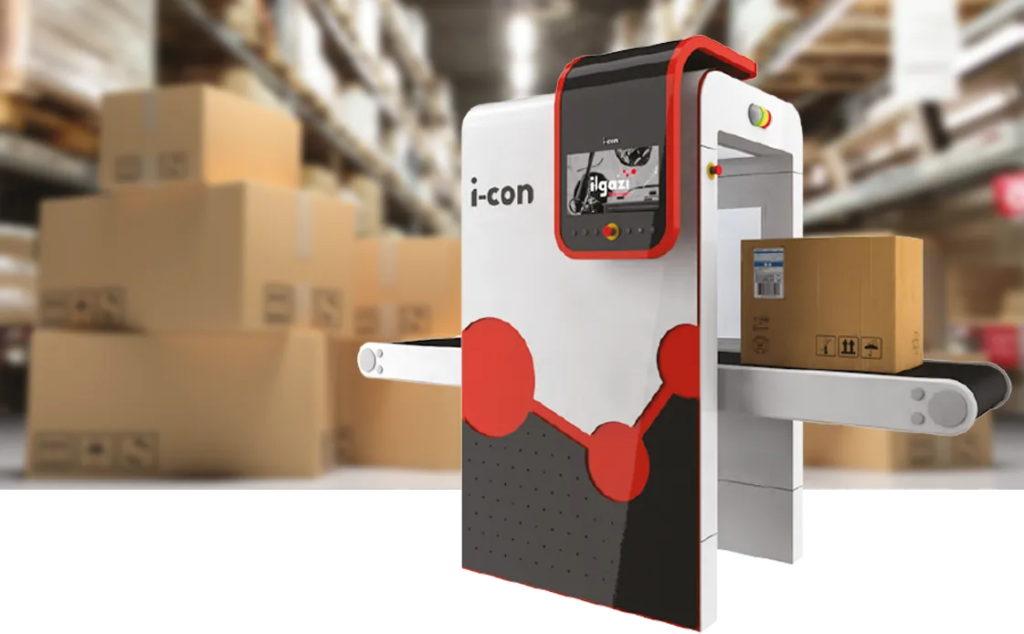
At the DC, RFID tunnel readers conveyor-mounted read zones capture every tag at full conveyor speed, processing thousands of items per hour without manual handling. Dock portal readers capture every item on carts or trolleys passing through.
This is where carton accuracy is verified. Mispack rates wrong items in a carton run at 2 to 10% across the industry on barcode-based operations. DC-level RFID reads catch mispacks before they reach the store, eliminating downstream inventory distortion.
Store Receiving and Floor Management: Handheld Readers
When cartons arrive at a store, a staff member reads the entire carton with a handheld reader without opening it every item inside is captured through the cardboard. The system confirms what arrived against the advance shipping notice and flags discrepancies immediately.
For cycle counts, a single staff member walking the sales floor with a handheld RFID reader captures every tag in range without touching or moving any product. What previously took a team several hours overnight now takes one person 20 to 40 minutes during trading hours.
Point of Sale: Deactivation and Final Read
Hard tags are deactivated by the EAS detacher at POS. For woven or hang tag RFID, a POS RFID reader updates inventory records in real time at the moment of sale not at the next count. This is what enables genuine real-time inventory visibility.
RFID Readers for Apparel: Ilgazi Technology supplies handheld readers for store cycle counting, fixed readers for dock portals, and tunnel reader configurations for DC sorting lines. View our reader range at RFID Readers
What RFID Clothing Tags Actually Deliver
The performance data for apparel RFID is well established across large scale deployments. These are consistent results, not pilot-phase projections.
| Metric | Without RFID | With RFID |
| Inventory accuracy | 65–75% | 99% |
| Full store inventory count | 4–8 hours (team) | 20–45 minutes (one person) |
| Out-of-stock rate | Baseline | Reduced by up to 50% |
| Comparable store sales | Baseline | 5–15% lift reported |
| Carton mispack detection | At store, after arrival | At DC, before dispatch |
| Returns processing | Manual identification | Automatic identification |
The inventory accuracy improvement is the foundation everything else rests on. A store running at 99% accuracy knows what it has. It can fulfil omnichannel orders from store stock with confidence. It can trigger replenishment at the right time. It surfaces items that are physically present but not visible in the system phantom inventory and turns them back into available stock.
The 5 to 15% comparable store sales lift is a consistent result from retailers including Zara, Marks & Spencer, and American Eagle driven primarily by reduction in out-of-stocks and by recovering phantom inventory that was previously unaccounted for.
RFID Clothing Tag Costs in 2026
Tag costs have fallen significantly over the past decade. In 2015, a disposable UHF inlay for apparel cost $0.20 to $0.50. In 2026, volume pricing starts at $0.03 per tag.
| Tag Format | Unit Cost (2026) | Reusable? | Best Scale |
| UHF hang tag inlay | $0.03–$0.10 | No | High volume, fast fashion |
| RFID woven label | $0.15–$0.40 | Permanent in garment | Premium, uniform, workwear |
| Soft adhesive label | $0.03–$0.08 | No | E-commerce, polybag |
| Hard tag (EAS+RFID) | $2–$8 per tag | Yes — 10,000+ cycles | High-value, theft-sensitive |
At the volumes major apparel retailers operate tens of millions of units per season RFID tagging adds less than 1% to the cost of goods sold. For a €30 garment, the tag cost is under €0.10.
The ROI question is not whether the tag cost is justified it is whether the infrastructure investment in readers, middleware, and integration is justified by the operational gain. For a mid-sized retailer operating 20 to 50 stores, this investment is typically recovered within 12 to 24 months through labour savings on inventory counts and reduction in lost sales from out-of-stocks.
Source Tagging vs. Store Tagging — Where to Tag in the Supply Chain
This is one of the most consequential decisions in any apparel RFID programme.
Source Tagging (Factory)
The RFID tag is applied at the factory or garment finishing centre, before the item enters the supply chain. The tag travels with the garment from production through the DC and into the store. Every read point along the way captures data production confirmation, export verification, DC receiving, store receiving, floor management, and sale.
Advantage: Maximum supply chain visibility. Every handoff is visible. Labour cost of tagging is at its lowest point seconds per garment at the factory.
Store or DC Tagging
RFID tags are applied at the distribution centre or store itself, typically to garments arriving without tags. This is more expensive in labour terms someone must physically apply each tag and all upstream supply chain visibility is lost.
When appropriate: Transitional deployments where supplier readiness is not yet in place, or for small volumes where source tagging negotiations are impractical.
The industry direction is clear: source tagging at the factory is the correct approach for any operation running at scale. Walmart, Zara’s supplier programme, and GS1’s source tagging guidelines all point in this direction. If your factories are not yet RFID capable, this is a supplier conversation to have now.
Anti-Counterfeiting and Brand Protection
Every RFID chip contains a TID (Tag ID) bank a factory-programmed, read only identifier unique to that specific chip that cannot be cloned with standard equipment. When a brand encodes its EPC data onto a hang tag or woven label and locks the chip against further writes, the tag becomes a tamper evident digital identity document for that garment.
A retailer or customs inspector with an RFID capable device can verify that the chip’s TID matches the brand’s records confirming authenticity. A counterfeit garment carrying a copied barcode or replicated visual label will fail this check because the TID cannot be replicated.
For brands operating in markets with significant counterfeiting exposure luxury goods, sportswear, premium denim woven RFID labels with locked TID verification provide an authentication layer that visible labels cannot match. This is increasingly a commercial requirement, not a premium add on.
Frequently Asked Questions
Do RFID tags on clothes affect the customer?
No. UHF RFID tags embedded in hang tags or woven labels are passive they have no battery and emit no signal unless a reader is actively interrogating them. They do not affect the wearer and cannot be read by standard consumer devices without specialist equipment. Hang tags are removed at POS; woven labels remain in the garment permanently without any effect on wear.
Can RFID clothing tags be washed?
Woven RFID labels embedded in garments are designed to survive the garment’s full lifecycle including repeated washing, tested to standard cycles at up to 60°C. Hang tags are removed before washing. Soft adhesive labels are not designed for washing exposure. For workwear, hospitality uniforms, or hospital linen, specify a woven label or encapsulated hard tag rated for laundry use.
What is the read range of an RFID clothing tag in a store?
In a standard retail environment, a UHF hang tag or woven label reads reliably at 1 to 4 metres from a handheld reader and up to 6 to 8 metres from a fixed reader with a directional antenna. In a DC tunnel reader, read rates consistently exceed 99%. Dense packing of garments on a rail reduces effective range somewhat this is expected and accounted for in system design.
Can a customer read my RFID tag with their phone?
No. Standard UHF RFID clothing tags cannot be read by consumer smartphones. Consumer NFC operates at 13.56 MHz. UHF RFID operates at 860–960 MHz. These are entirely different frequency bands requiring different hardware. A consumer would need a dedicated UHF RFID reader not a standard consumer device.
What happens to RFID tags after the garment is sold?
Hang tags are removed at POS and discarded or collected for recycling. Woven labels remain in the garment. The EPC data on the chip is no longer actively queried by the retailer after sale. The chip cannot be read without a dedicated UHF reader, and there is no ongoing transmission.
Can RFID clothing tags be reused?
Hard tags are designed for reuse typically 10,000 or more attach detach cycles. They are collected at POS and returned to the DC for redeployment. Hang tags and soft labels are single use. Woven labels remain permanently in the garment.
How do RFID clothing tags enable omnichannel fulfilment?
RFID allows retailers to fulfil online orders from store stock with confidence, because inventory records are accurate enough to act on. Without RFID, store accuracy is typically too low to reliably fulfil ship from store orders the risk of picking an item that is not actually in the store is too high. With RFID and 98%+ accuracy, store-as-warehouse fulfilment becomes operationally viable. The system knows where each item is, not just that it exists somewhere in the estate.
How does RFID help with returns processing in apparel?
A returned garment with a damaged barcode label requires manual identification someone must physically inspect and look up the item. An RFID woven label on the same garment is instantly readable regardless of what happened to the outer packaging, because RFID requires no line of sight or label condition. Returns processing time drops by 30 to 50%, and routing decisions restock, refurbish, return to supplier are made and executed without a manual identification step.

İlgazi Teknoloji, an RFID company based in İzmir, develops hardware, software, and integration solutions in the fields of RFID, IoT, and smart tracking systems, providing measurable efficiency improvements to businesses in retail, logistics, warehousing, and manufacturing processes.